
Frames and guiding system
- Car frames, lift cars and counterweights
- Guide rails and brackets
Suspension systems
- Ropes, belts and rope terminations
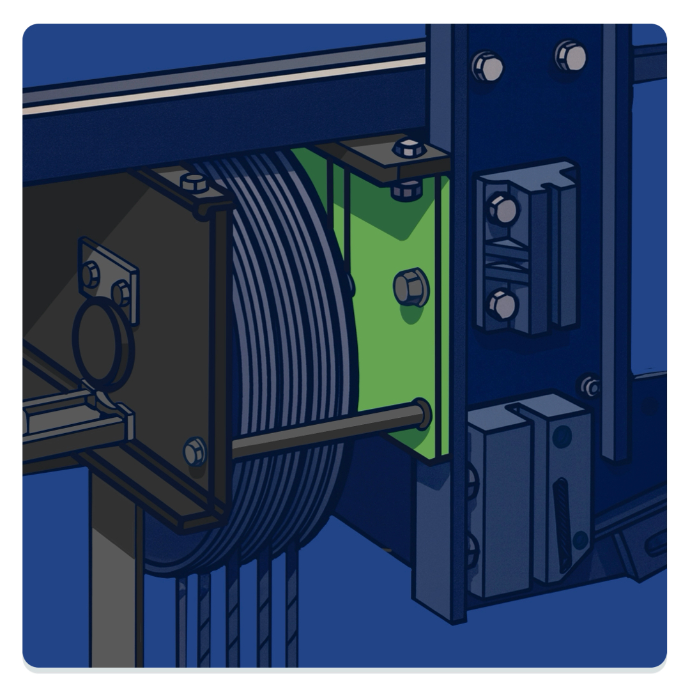
- Sheaves
Safety components
- Overspeed governors
- Safety gear
- Buffers
Prevent and resolve mechanical faults.
This course on mechanical component maintenance provides technicians with the tools and knowledge required to carry out high-quality preventive maintenance and to resolve common mechanical faults in lifts.
Technicians will develop the ability to identify wear, assess component condition, and recognise warning signs during routine inspections and maintenance visits. The course examines in detail the most critical mechanical components of lifts, including sheaves, traction ropes, guide rails, buffers, brakes, and the suspension system.
Each of these components is analysed in depth to understand how it operates, the types of faults that may occur, and the most effective techniques for maintenance and repair.
Online
8 to 20 hours
Flexible
Nota: Este curso es parcialmente bonificarle por FUNDAE en España.
Types and classification of mechanical components
Understand the different mechanical components found in a lift (excluding doors) and their various types and configurations.
Assessment of component condition
Enable technicians to identify component wear (bearings, sheaves, guide rails, ropes, etc.) and assess remaining service life during maintenance visits, recognising warning signs that may indicate potential future faults.
High-quality preventive maintenance
Carry out preventive maintenance on mechanical components of lifts and other lifting equipment, inspecting operation, wear and lubrication, and making adjustments in line with technical documentation and maintenance schedules, while always complying with health and safety requirements.
Diagnosis and detection of common faults
Identify the most frequent faults in mechanical systems, locate and document them using drawings, technical specifications and company-approved assembly methods, in order to correct performance deviations.
.
Repair and replacement of components
Repair or replace mechanical components, ensuring compatibility, functional quality and safety, and carrying out operational tests in accordance with technical documentation and installation procedures.
Compliance with safety and quality requirements
Apply all relevant health and safety measures specific to lift construction and installation, ensuring quality at all times and compliance with current regulations.
Would you like to know more?